MEMORY
Doodle while you listen
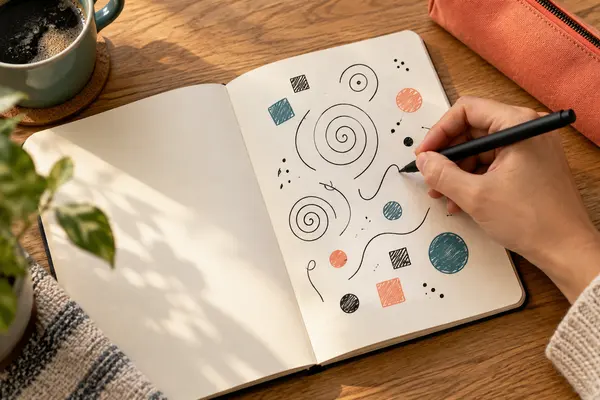
People who shaded shapes during a dull message recalled 29% more on a surprise test.
See the experiment doodlepens
00DOODLING, BY THE EVIDENCE
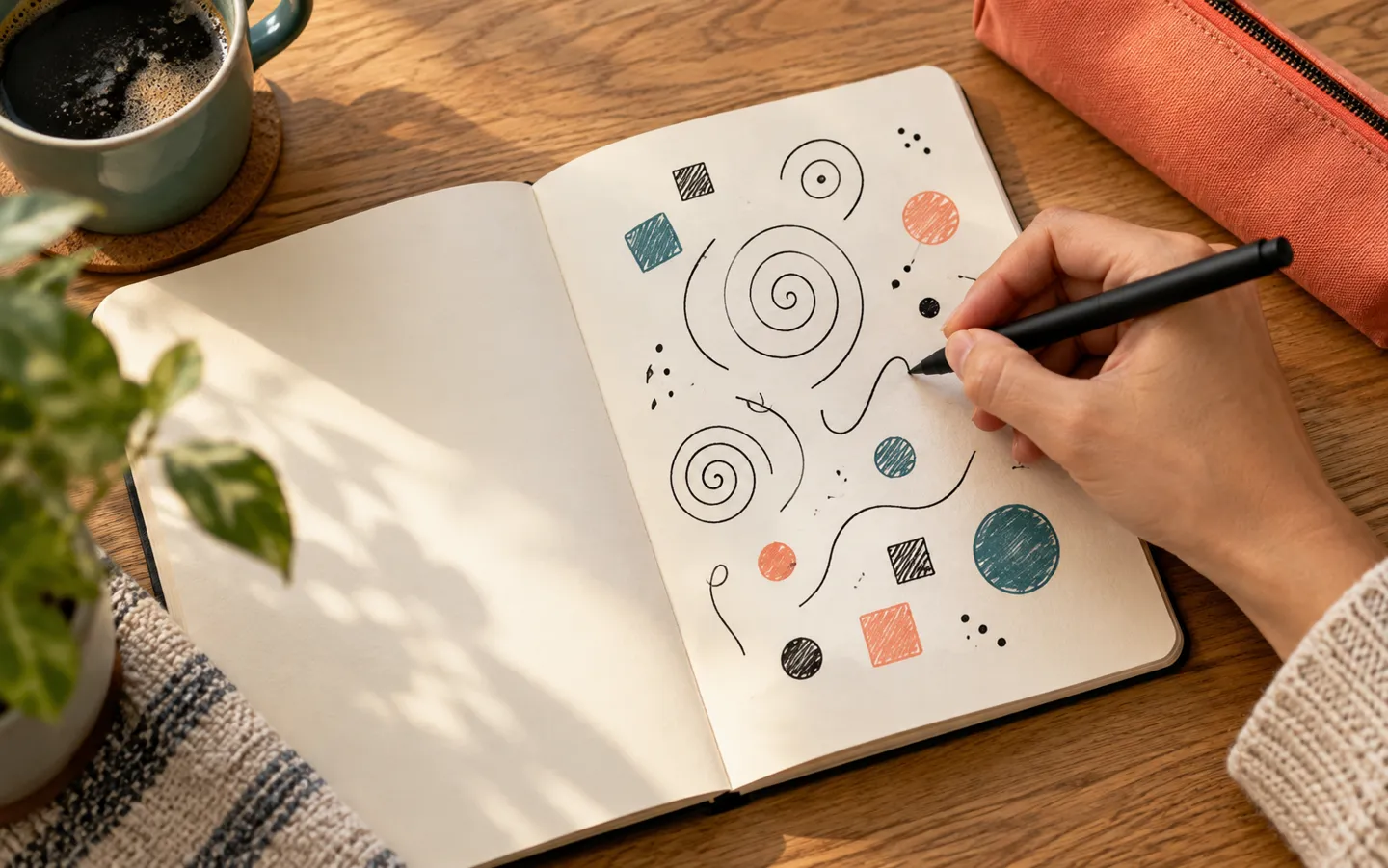
Doodling in the margin is not always a sign you have stopped listening.
In one experiment, people who shaded in shapes during a dull phone message remembered more of it. Here is what research says about doodling and writing by hand, and how to choose a pen that suits the way you doodle.
Plain English, with the sources linked.
Find your doodle pen01Principles
02THE SHORT ANSWER
Simple doodles took little attention in one study,
and seemed to stop minds from drifting.
MEMORY
People who shaded shapes during a dull message recalled 29% more on a surprise test.
See the experimentBRAIN
A 2024 EEG study saw more connectivity between brain regions during handwriting than typing.
What they measuredTOOLS
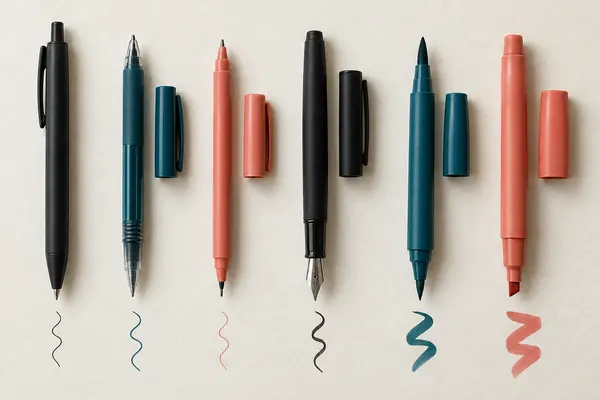
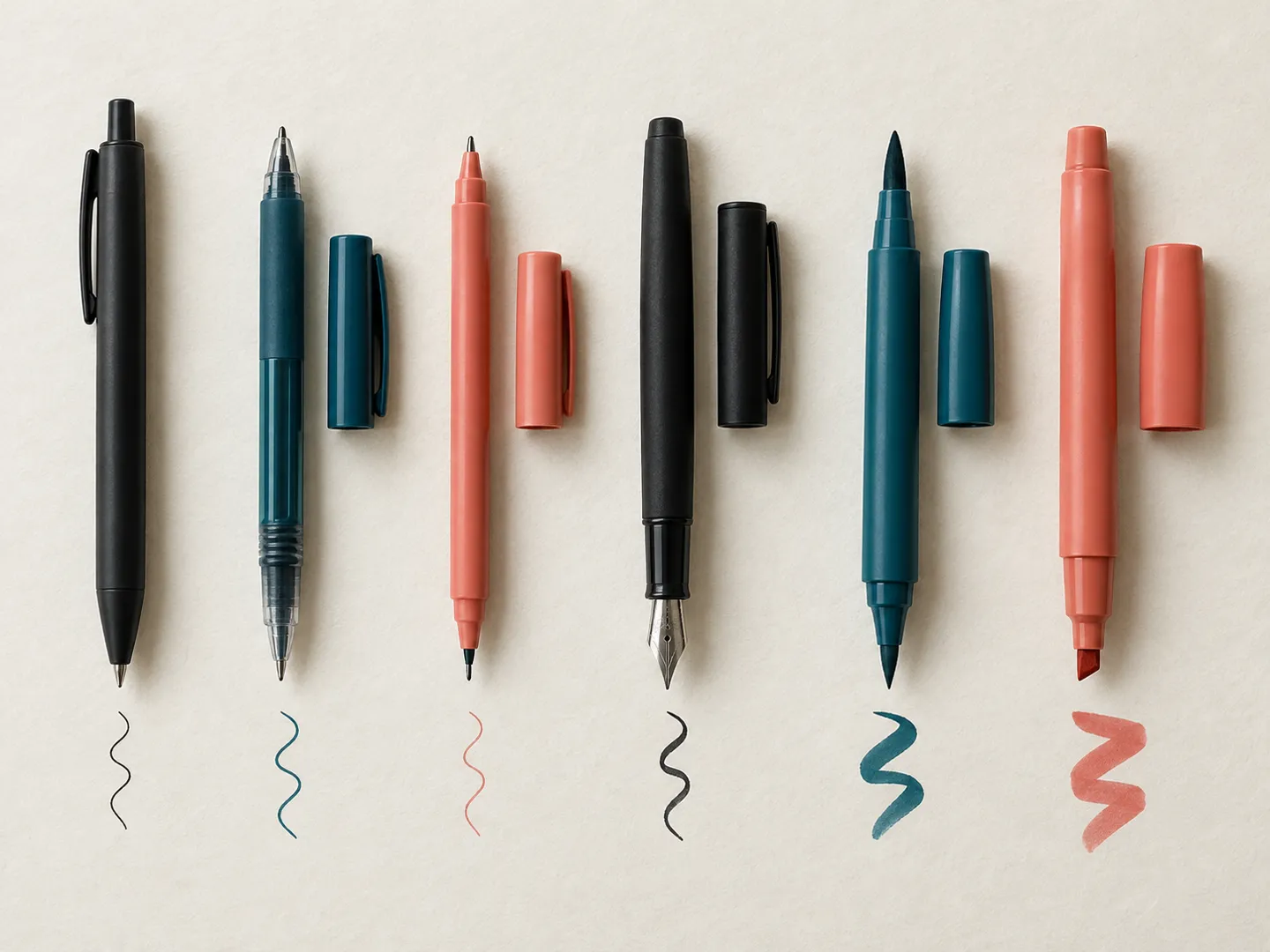
Ballpoint, gel, fineliner, fountain or brush: each makes a different line.
Try the pen picker03A QUICK PEN PICKER
Pick a pen type to see the kind of line it makes and what it is good for. The bar shows how bold its line usually is.
These are general traits of each type. Individual pens, inks and papers vary, so test on scrap paper first.
04TWO STUDIES WORTH KNOWING
One small study found a clear benefit.
One larger replication found no clear gap.
+29% details
Recalled on a surprise test
Forty people listened to a monotonous phone message about a party. Half shaded in squares and circles while listening. The doodlers remembered 29% more names and places, and also noted more correct names during the task (7.8 against 7.1).
DOODLING · 2009
No clear gap
Handwritten against typed notes
A replication with 145 students, more than twice the 67 in the famous 2014 study, found no significant difference in quiz scores. Typed notes were longer and more word for word, and more verbatim copying went with lower scores.
NOTES · 2021
Single studies are a starting point, not the last word. The doodling result came from one small experiment, and the notes question shows how a famous finding can soften when repeated.
05START DOODLING
Put them by the phone or on the meeting table, so doodling is easy when a call drags on.
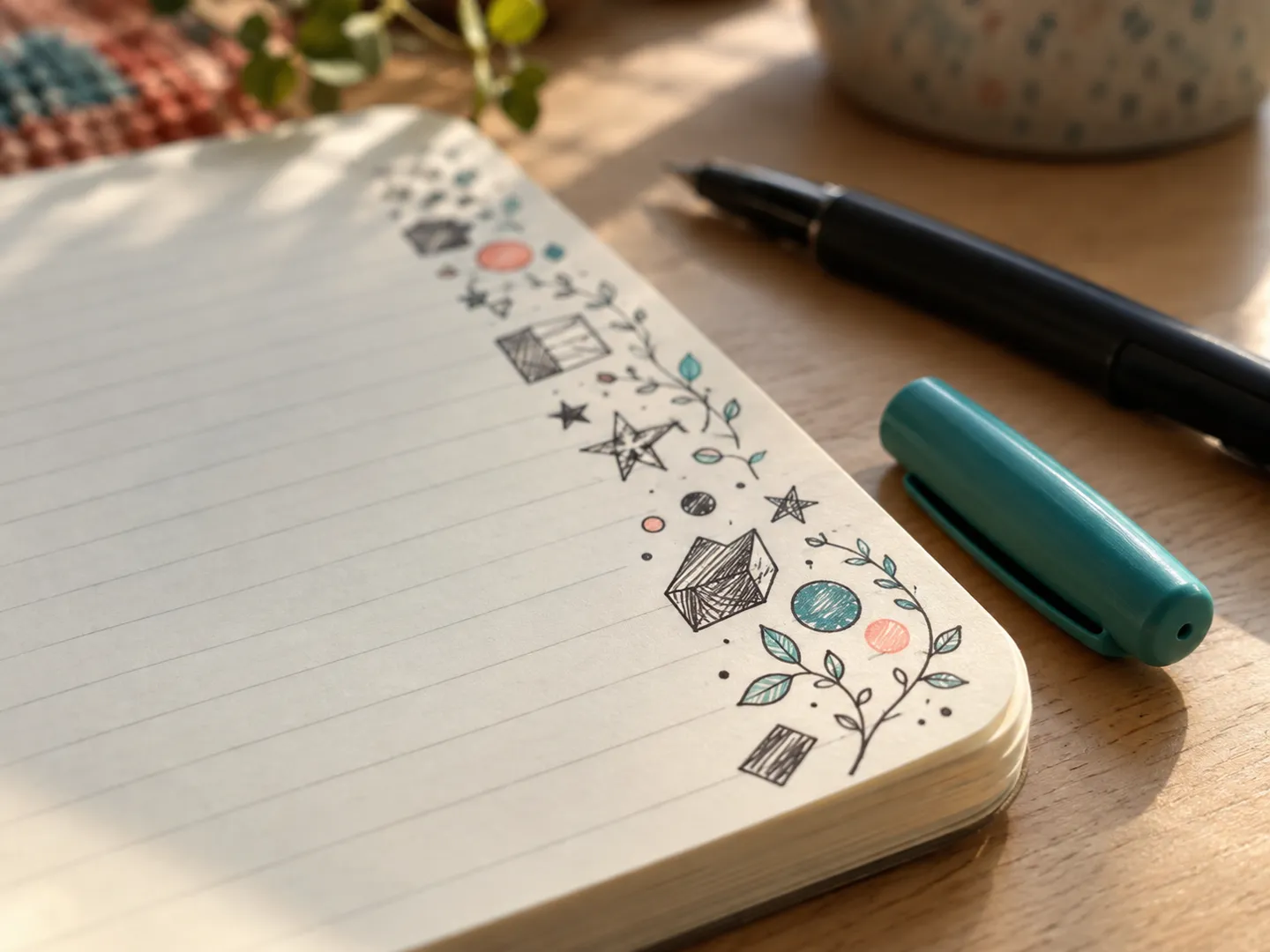
Shade boxes, draw spirals or fill circles. In the 2009 study, simple shading was enough; you are not trying to make art.
Whether by hand or keyboard, avoid copying word for word. In the 2021 study, more verbatim notes went with lower scores.
Keep pen caps away from mouths, especially children's. That is why caps on children's pens are ventilated under ISO 11540.
06PEN FACTS
László Bíró filed a British patent on 15 June 1938. The Royal Air Force later ordered more than 30,000 for navigators, because nib pens tended to leak at altitude.
Researchers in Norway recorded 36 students with a 256-sensor EEG net. Connectivity between brain regions rose when they wrote by hand, but not when they typed.
The doodlers in the 2009 study were not drawing anything elaborate: they shaded in squares and circles. The researcher suggested doodling uses just enough attention to stop the mind wandering.
ISO 27668-1:2017 sets minimum quality requirements for gel ink ball pens and refills for general use. A second part covers pens for documents that must last.
ISO 11540 sets safety rules for caps on pens for children up to 14, including ventilated caps with a set vent area and air flow. Caps that do not comply should carry a warning.
07QUICK QUESTIONS
Short answers to the questions people ask most.
It may. In a 2009 study of 40 people listening to a dull, two-and-a-half-minute phone message, those asked to shade in shapes while listening recalled 29% more on a surprise memory test than those who did not doodle.
The evidence is mixed. A well-known 2014 study favoured handwriting, but a 2021 replication with 145 students found no significant difference in quiz scores between typed and handwritten notes.
A 2024 study at the Norwegian University of Science and Technology recorded 36 students with a 256-sensor EEG net. Connectivity between brain regions increased when they wrote by hand, but not when they typed.
Ventilation. ISO 11540 sets safety requirements for caps on writing instruments meant for children up to 14, including ventilated caps with a set vent area and air flow, because of the risk of a swallowed cap blocking the airway.
László Bíró filed a British patent for his ballpoint on 15 June 1938. Britain’s Royal Air Force later ordered more than 30,000 for its navigators, because nib pens tended to leak at altitude.
08Sources
A NAME WORTH WRITING DOWN
doodlepens.com is part of the DoodleSale portfolio. It isn't in an auction right now, but you can ask about leasing it.